
Food & Packaging Inspection Equipment
X-ray · Metal Detection · Checkweighing

Checkweighing Systems
Inline Weight Inspection, Sorting and Rejection for Packaged Products
LITUBO checkweighing systems are designed for continuous dynamic weight control on automated production lines. They help manufacturers identify underweight, overweight, missing-component and incorrect-count products before cartoning, warehousing or shipment.
The product range includes compact and standard checkweighers, large-range platforms, left-right sorting systems, automatic weight grading solutions and combined metal-detection and checkweighing systems. Final configuration is selected according to product weight, package dimensions, required speed, dynamic accuracy, rejection method and production-line layout.
Dynamic checkweighing solutions for packaged food, beverages, pharmaceuticals, consumer products, cartons and industrial packages.
Dynamic Weight Inspection
Continuous inline weighing identifies underweight, overweight and non-conforming products.
Missing-Component Control
Weight comparison can help identify missing bottles, tablets, parts or incomplete product kits.
Automatic Rejection & Sorting
Systems can be configured for pusher rejection, air blast, left-right diversion or multi-grade sorting.
Production-Line Integration
Conveyor height, direction, communication and rejection layout can be matched to the existing production line.
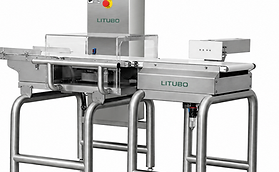
Compact & Standard Online Checkweighers
Standard and low-profile checkweighers for small and medium packaged products requiring continuous weight verification and automatic rejection.




Large-Range & Heavy-Duty Checkweighers
Wide weighing platforms for cartons, bags, trays and heavier products requiring stable end-of-line weight verification.


Left-Right Sorting Checkweighers
Compact systems combining dynamic weighing with left-right diversion for pass/fail separation or two-way weight classification.


Integrated Checkweighing Solutions
Integrated systems combining dynamic weight control with metal detection or automatic print-and-apply labeling.

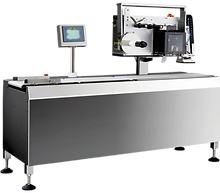
Standard & Heavy-Duty Checkweighers
For continuous pass/fail weight verification across small packages, cartons and heavy products..
Model
JZ-150 Series
JZ-220 Series
JZ-300 Series
JZ-400
JZ-450
JZ-600
Key Points
••Compact, standard, low-profile and heavy-duty platforms
• Upper-limit, lower-limit and pass judgment
• Product recipe storage for fast changeovers
• Automatic rejection of non-conforming products
• Optional USB, RS232, RS485 or LAN communication
Sorting & Integrated Systems
For two-way weight sorting and production lines requiring additional inspection or labeling functions.
Model
JZ-150LR
JZ-220LR
JZ-150LRH
JZ-JS220
JZ-T300
Key Points
• Left-right product diversion
• Pass/fail or two-way weight classification
• Combined metal detection and checkweighing
• Automatic print-and-apply labeling
• Project-specific data and line-integration options
Recommended Applications


Information Required for Model Selection
• Product name and product type
• Package form and packaging material
• Minimum, target and maximum product weight
• Product length, width and height
• Required production speed and actual product spacing
• Required dynamic accuracy or weight tolerance
• Pass/fail rejection or required number of weight grades
• Required rejection, diversion or receiving method
• Existing conveyor height and conveying direction
• Available installation space
• Cleaning, washdown, humidity and environmental conditions
• USB, RS232, RS485, LAN, PLC or MES communication requirements
• For JZ-JS220: target metal contaminant and product-effect information
• For JZ-T300: label size, print content, barcode or QR-code requirements
Information Required for Model Selection
How does a dynamic checkweigher weigh products while they move?
A dynamic checkweigher weighs products while they move along the line, without stopping them. As each item passes over a weighing conveyor built around a load cell, the system captures its weight in motion and compares it with the target range, then acts on the result — typically accepting or rejecting the pack.
Because it weighs continuously at line speed, a dynamic checkweigher controls weight on every pack rather than by sampling. It is a weight-control device, not a contaminant detector. Its accuracy depends on how stable and consistent the weighing conditions are, which is why line speed, product stability and installation all influence the result. In short, stable, consistent conditions are as important to the result as the checkweigher itself.
What is the difference between a dynamic checkweigher and a static scale?
The main difference is that a dynamic checkweigher weighs products in motion at line speed, while a static scale weighs an item that is stationary. A static scale is simpler and can be very precise for a single settled item, but it cannot keep up with a production line. A dynamic checkweigher is engineered to capture an accurate weight during the brief moment each pack crosses the weighing section.
That capability comes with more dependence on conditions: line speed, spacing, product stability and vibration all affect a dynamic reading. So a checkweigher trades some of the static scale's simplicity for the ability to weigh every pack automatically as it moves through the line.
What weighing accuracy and repeatability can we realistically expect?
Achievable accuracy and repeatability cannot be stated as a fixed figure in advance, because they depend on the whole application rather than the checkweigher alone. The main influences are product weight and size, line speed and throughput, product stability and presentation, spacing between packs, vibration and airflow, temperature and environment, and how well the machine is installed and maintained.
A stable, well-spaced, moderate-speed product on a properly installed line achieves tighter, more repeatable results than a light, unstable or very fast product, or one affected by draughts or vibration. This is why the same equipment performs differently on two lines. Realistic accuracy for your case is best confirmed with your actual product and conditions.
What limits checkweigher accuracy in practice?
Several factors limit checkweigher accuracy in practice. Product-related influences include weight, size, shape and stability — a light or unstable item is harder to weigh precisely in motion. Line factors include speed, spacing between packs and how smoothly product is transferred on and off the weighing conveyor. Environmental factors such as vibration, airflow, draughts and temperature changes also affect the load cell.
Installation and maintenance matter too: a stable, level mounting isolated from vibration supports better results. Because these factors combine, accuracy is a property of the whole setup, not just the machine. Understanding which of them dominate in your case is the key to realistic expectations and to getting the best from the equipment.
What product weight range can a checkweigher handle?
The weight range a checkweigher can handle depends on the model, as different machines are designed for different ranges — from small, light packs to large, heavy ones. A unit optimised for light products will not suit heavy cases, and vice versa, because the load cell and mechanics are matched to a range.
Choosing the right machine means matching its designed range to your actual product weights, including the lightest and heaviest items it must handle. The specific range for a given model should be confirmed against your products rather than assumed. Describing your weight range and pack sizes allows a suitably specified checkweigher to be identified, so accuracy and reliability hold across everything the line runs.
How do product size and dimensions affect checkweighing?
Product size and dimensions affect checkweighing because they influence how the item sits and moves across the weighing conveyor. A product that is long relative to the weigh section, or unstable, may not be fully supported at the moment of weighing, which reduces accuracy. Size also affects spacing, since larger items need more room to be weighed individually.
The weighing conveyor length and speed are matched to the product size so each item is captured cleanly and separately. Products that are very large, very small or awkwardly shaped need particular attention. Providing your product dimensions alongside weight helps ensure the checkweigher is specified to handle them accurately at the intended line speed.
How does line speed affect weighing accuracy?
Line speed affects weighing accuracy because it determines how briefly each product sits on the weighing conveyor. At higher speeds the system has less time to capture a stable reading, so achieving the same accuracy becomes more demanding and depends on good stability and setup. Faster lines also make product transfer and spacing more critical.
There is generally a trade-off between speed and achievable accuracy for a given product: pushing speed can widen the tolerance that can be held reliably. The right balance depends on the product and requirements. Defining the real target speed, including peaks, when specifying the checkweigher ensures it is configured to hold the needed accuracy at that rate.
What throughput (packs per minute) can a checkweigher achieve?
The throughput a checkweigher can achieve, usually expressed in packs per minute, depends on the model, the product and the accuracy required. Higher throughput is possible, but it interacts with weight, product size, spacing and the tolerance that must be held — pushing speed can affect achievable accuracy for a given product.
So throughput is not a single fixed number; it is defined together with product characteristics and the required precision. A realistic rate for your case, including peaks, should be confirmed for the specific model against your product. Describing the products, weights and target speed allows a checkweigher to be specified that sustains the needed throughput while holding the required accuracy.
Need Help Selecting a Checkweigher?
Send us your product photos, package dimensions, weight range, required speed, target accuracy, rejection method and production-line layout. We will review the application and recommend a suitable model and configuration.