
Food & Packaging Inspection Equipment
X-ray · Metal Detection · Checkweighing

Metal Detection Systems
Inline Metal Contamination Control for Packaged, Bulk and Pipeline Products
LITUBO metal detection systems are designed to identify ferrous, non-ferrous and stainless-steel contaminants in products moving through automated production and packaging lines. When a metal contaminant is detected, the system can trigger an alarm, stop the conveyor or activate an automatic rejection mechanism according to the selected configuration.
The product range includes conveyor metal detectors for standard packaged products, specialized systems for aluminum-foil and metallized-film packaging, and pipeline metal detectors for powders, granules, pastes and free-flowing product streams. Final configuration is selected according to product characteristics, packaging material, aperture or pipe size, target contaminant, production speed, product effect, rejection method and site conditions.
Metal detection solutions for packaged food, pharmaceuticals, consumer products, aluminum-foil packages, powders, granules and process-product streams.
Multi-Metal Detection
Detects ferrous, non-ferrous and stainless-steel contaminants according to product characteristics and detector configuration.
Product-Effect Compensation
Product learning and signal compensation help manage the effects of moisture, salt, sugar, temperature and packaging conditions.
Automatic Rejection
Systems can be configured for alarm stop, pusher, air blast, flap, belt retraction or other application-specific rejection methods.
Production-Line Integration
Detector aperture, conveyor height, direction, line speed, communication and rejection layout can be matched to the production line.
Conveyor Metal Detection Systems
Inline metal detection systems for packaged and unpackaged products moving through food, pharmaceutical and general manufacturing lines.

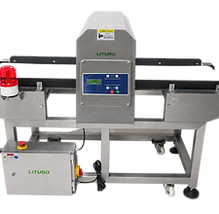
Digital conveyor metal detectors for identifying ferrous, non-ferrous and stainless-steel contaminants in standard packaged products.
Aluminum-Foil Package Metal Detection Systems
Specialized metal detection systems for products packed in aluminum foil, foil-lidded containers or metallized-film packaging.
Pipeline Metal Detection Systems
Enclosed metal detection systems for powders, granules, pastes and free-flowing materials before filling or final packaging.

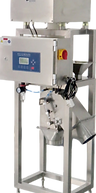
Compact pipeline metal detector for powders, granules and low-capacity process streams using an 80 mm pipe configuration.
General industrial X-ray image inspection for packaged goods and manufactured products.

Medium-capacity pipeline metal detector for powders, granules, pastes and process materials using a 150 mm pipe configuration.

Large pipeline metal detection system for higher-capacity product streams using a 200 mm pipe configuration.
Mining Belt Conveyor Metal Detector
Digital split-frame metal detection for mining and bulk-material conveyors, designed to detect ferrous, non-ferrous and stainless-steel contaminants in demanding production environments.


Conveyor & Package Inspection
For packaged or unpackaged products moving through standard production and packaging lines.
Model
JZ-M Series
JZ-AM Series
JZ-JS220
Key Points
• Standard conveyor metal detection
• Specialized aluminum-foil package inspection
• Product learning and product-effect compensation
• Alarm stop or automatic rejection
• Combined metal detection and checkweighing available
Pipeline Product Inspection
For powders, granules, pastes and free-flowing materials inspected before filling or final packaging.
Model
JZ-HS80
JZ-HS100
JZ-HS150
JZ-HS200
Key Points
•Four standard pipe-diameter options
• Enclosed inspection of process-product streams
• Suitable for powders, granules and suitable paste products
• Automatic diversion of contaminated material
• Pipe connection and cleaning method configured by project
Recommended Applications


Information Required for Model Selection
•Product name and product form
• Packaging material, including foil or metallized film
• Maximum product length, width and height
• Product temperature, moisture and salt characteristics
• Target metal type and required test-piece size
• Required detector aperture or pipeline diameter
• Production speed, capacity or material flow rate
• Product spacing on the conveyor
• Required alarm, stop or automatic rejection method
• Existing conveyor height and conveying direction
• Available installation space
• Cleaning, washdown and environmental conditions
• Communication, data export, PLC or MES requirements
• Representative finished-product samples for testing
Information Required for Model Selection
FAQs
Common questions about equipment selection, customization, installation, materials and quotation requirements.
How does a food metal detector detect metal?
A food metal detector works by generating a balanced electromagnetic field. When a piece of metal passes through the aperture, it disturbs that field, and the system registers the change as a detection. Ferrous, non-ferrous and stainless-steel contaminants all disturb the field, though by differing amounts, which is why some metals are easier to find than others.
The product itself also passes through the field, and moist, salty or conductive products can create their own signal that the detector must work around. Effective detection therefore relies on distinguishing a genuine metal signal from the product's own response. This balance between sensitivity and stability is central to how the technology performs on a given food product.
Why are stainless steel and non-ferrous metals harder to detect than iron?
Stainless steel and many non-ferrous metals are harder to detect than iron because they disturb the detector's electromagnetic field less strongly. Ferrous metals are both magnetic and conductive, giving a clear signal. Non-ferrous metals such as aluminium or copper are conductive but not magnetic, while common stainless steels are only weakly magnetic and relatively poor conductors, so their signal is weaker.
As a result, the detectable size for stainless steel is usually larger than for ferrous metal under the same conditions. This gap widens further with difficult products or packaging. Understanding which metals are the realistic risk helps set sensible expectations, since performance is defined by the hardest metal you need to find, not the easiest.
What detection sensitivity can we realistically expect on our product?
Achievable sensitivity cannot be quoted as a single figure in advance because it is set by the application, not the detector alone. Key influences include the product's moisture, salt and temperature; the aperture size relative to product dimensions; the metal type, with stainless steel usually the hardest; packaging such as foil; line speed; and the operating environment.
Product effect — the signal a moist or conductive product produces itself — often defines the practical limit, especially for wet, salty, hot or fresh products. This is why generic figures can mislead when applied elsewhere. The dependable way to establish realistic sensitivity is to test the actual product, in its true packaging, at the intended aperture and speed.
How do aperture size and product dimensions affect sensitivity?
Aperture size and product dimensions have a strong influence on sensitivity. A metal detector is generally most sensitive at the centre of its aperture and less so near the walls, so a larger aperture than the product needs reduces achievable sensitivity. Matching the aperture closely to the product profile keeps contaminants nearer the most sensitive zone.
Product thickness and orientation matter too, since a contaminant's detectability changes with how the product presents it to the field. The practical guidance is to size the aperture to the product and pack, allowing for handling, rather than oversizing for convenience. Because these factors interact with the product itself, the realistic result is best confirmed for the specific application.
What is product effect and which products cause it?
Product effect is the signal that the food itself produces in a metal detector, separate from any contaminant. It arises mainly from conductivity, which is driven by moisture and salt, and sometimes by temperature. Wet, salty, fresh or warm products — such as meat, cheese, bread or brine-packed items — tend to show strong product effect.
The problem is that this signal can resemble or mask a small metal contaminant, limiting how sensitive the detector can be without causing false rejects. It is a physical characteristic of the product, not a fault. Recognising which products carry significant product effect is the first step to setting the detector up realistically and choosing appropriate detection settings.
How is product effect reduced or compensated during setup?
Product effect is managed during setup rather than eliminated. Modern detectors use techniques such as operating at a suitable frequency and 'phasing out' the product's signal, so the system focuses on the difference a metal contaminant would make. Careful setup with the real product, consistent presentation and stable line conditions all help.
The aim is to suppress the product's own response enough to detect realistic contaminants while keeping false rejects manageable. There are limits: very strong product effect still constrains achievable sensitivity. Because the right settings depend on the specific product, packaging and line, they are established during commissioning and confirmed by testing rather than assumed from a datasheet. In short, compensation reduces the impact of product effect but cannot remove it entirely for difficult products.
Can metal detection handle wet, salty, hot or frozen products?
Metal detection can be used on wet, salty, hot and frozen products, but each affects performance in its own way. Wet and salty products are conductive and show strong product effect, which limits sensitivity to small metal, particularly stainless steel. Hot products can shift the signal as temperature changes. Frozen products are less conductive but dense and cold, which brings different considerations.
Detectors handle these cases with suitable frequency selection and setup, though there are realistic limits, and for some difficult products or packaging X-ray may be more appropriate. What is achievable depends on the specific product, packaging, dimensions and line speed, so results for these products are best confirmed by testing rather than assumed.
What causes false rejects in food metal detection?
False rejects — where good product is rejected without any real contaminant — usually come from the product or the environment rather than actual metal. Common causes include strong product effect from moisture or salt, inconsistent product presentation, packaging such as foil, vibration, nearby electrical interference, and temperature changes. Settings that are too aggressive for the product also contribute.
Because several factors can combine, false rejects are best diagnosed by looking at the whole situation: product, packaging, setup, line conditions and surroundings. Some level of careful tuning is normal, especially with difficult products. Reducing false rejects without losing genuine sensitivity is a balance, and it depends heavily on the specific product and line conditions.
FAQs
Common questions about equipment selection, customization, installation, materials and quotation requirements.
Frequently asked questions
Need Help Selecting a Metal Detection System?
Send us your product type, package dimensions, product weight, line speed, primary contaminant risk, required rejection method and available installation space. We will review the application and recommend a suitable model, tunnel size and system configuration.